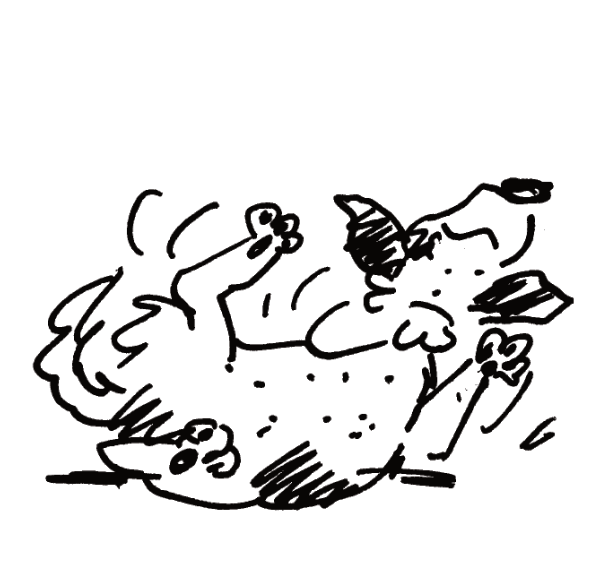
After a misdiagnosis of a torn cruciate ligament, X-rays revealed that Molly actually had hip dysplasia. I took her to a veterinary physiotherapist who helped us address the lower back pain and what seemed like sciatica she was experiencing. But exercises and TENS therapy didn't help with the strange turns she was having.
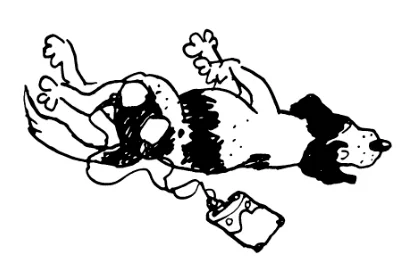
Molly hooked up to the TENS machine. A mild electric current stimulates the sciatic nerve and leads to pain relief
I began to keep a spreadsheet of when the seizures occurred.
The physiotherapist suggested it might not be physical, but neurological – focal seizures. Once she pointed that out, it all fell into place. The seizures were completely random, unrelated to how much exercise Molly had, time of day, or anything else we could identify.
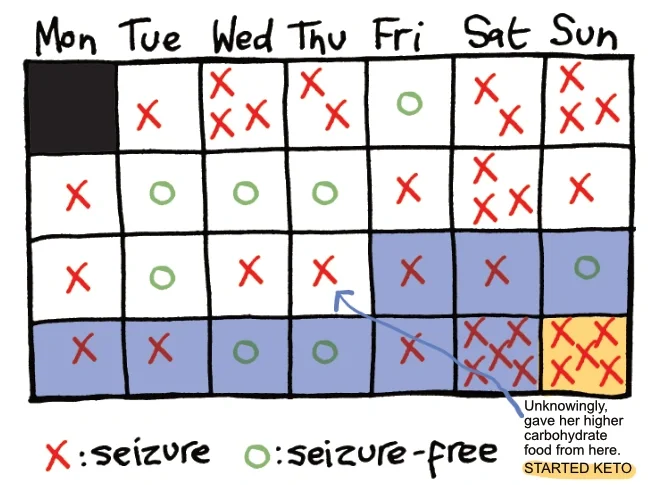
I started keeping note of Molly’s seizures on a Tuesday
A high fat, low protein, very low carbohydrate diet worked. At first.
I had a hunch that a ketogenic diet might help. (I have a friend who managed her migraines successfully when she cut carbohydrates from her diet. Migraines, like seizures are caused by abnormal electrical activity in the brain.) I looked for research about ketogenic diets in dogs and found that there was some success with using them to treat epilepsy. And a ketogenic diet did work – for a while. On day seven of her keto diet the seizures disappeared (the effect of higher carbohydrates also seemed to be delayed, giving her a cluster of severe seizures nine days after I made that mistake).
I made food from scratch using fatty cuts of lamb, brassicas like broccoli, sardines, and eggs, plus a little seaweed to cover trace minerals. I was also using a little MCT (medium chain triglyceride) oil, as I read it was a good way to promote ketosis.
The seizures, which had been happening almost daily (often causing disorientation, sometimes vomiting), stopped for 18 straight days.
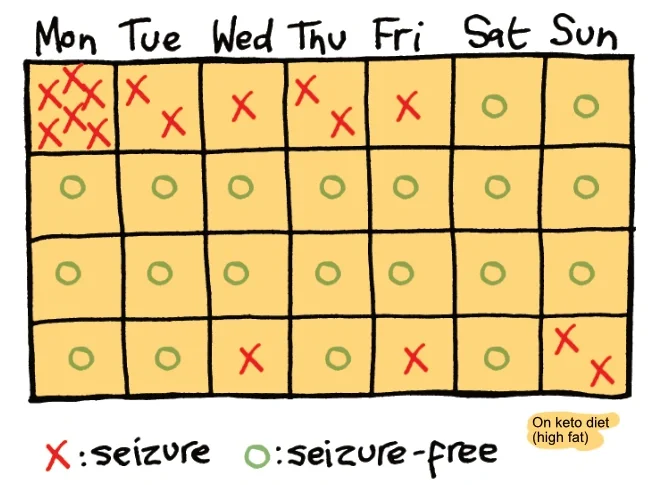
A high fat ketogenic diet worked at first
the seizures returned
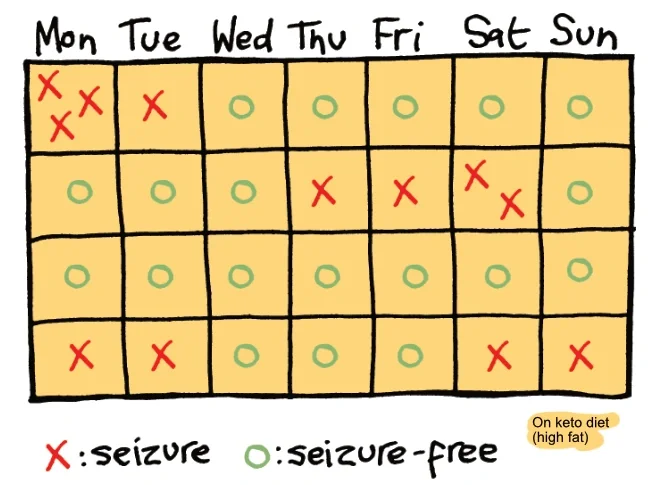
It is a struggle to keep Molly in ketosis and seizure-free
But maintaining ketosis via diet is difficult for a dog. I'm still researching exactly why this is the case, but the upshot is that it's nearly impossible to keep ketone levels high enough in the blood to have a protective effect on the brain.
This could be because protein in the diet breaks down to make glucose (via gluconeogenesis). If dogs are better at doing this, any protein will lead to higher blood glucose and fat won’t be converted into ketones.The fat will remain as fat.
Having high levels of fat in the diet – which can be healthy for people – is not healthy for dogs. It can lead to pancreatitis, a very dangerous condition.
Current Approach
I’ve reduced the amount of fat in her diet and increased the MCT oil. There is some interesting research on how MCT oil can increase ketones and have a separate neuroprotective effect. I'll write more about that later.
In the meantime, Molly’s seizures continue, but they are much milder than before. They don't seem to bother her as much as they bother me.
She's a happy dog.