Four months seizure free!
I'm happy to report that all the combing and baths and cedar oil flea killer/repellent has kept Molly free of fleas the rest of the summer. And we are celebrating four months without any seizures.

Molly doesn’t like baths, but neither did the fleas.
Happy days.
So Your Chemical-Free Dog Gets Fleas: What Next?
How do you treat a dog for fleas when the chemical anti-flea treatment she was given before coming to the UK probably caused her focal seizures? Those were most likely caused by Bravecto tablets, but I've read about other dogs reacting badly to the treatments administered via drops to the back of the neck. Systemic chemical treatments were out.
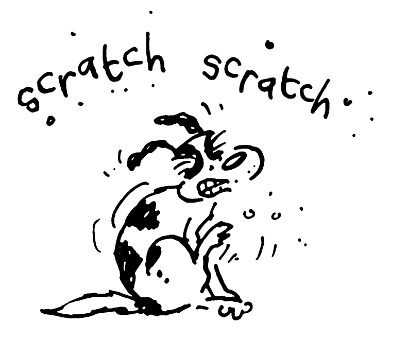
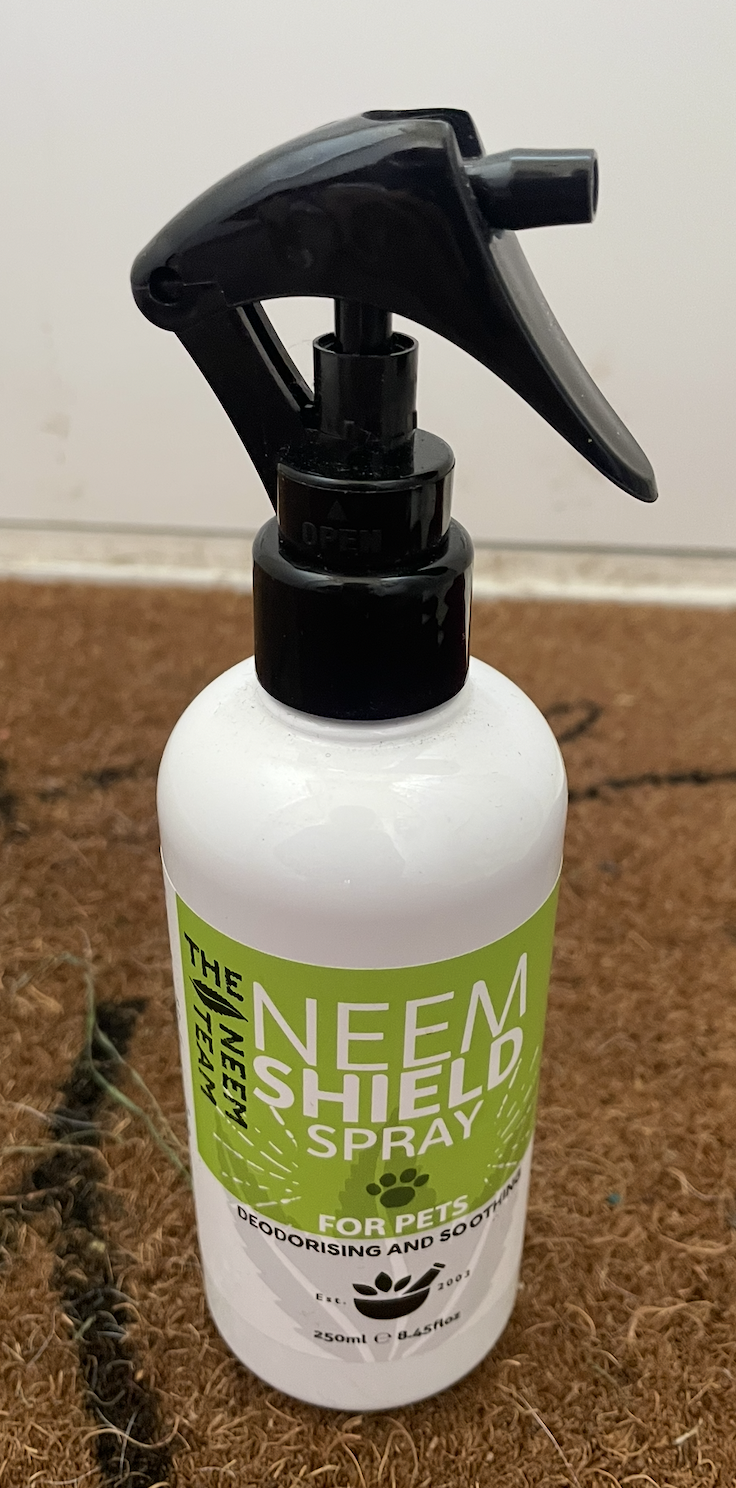
But the Billy No Mates supplement (a natural deterrent made from mint, seaweed, fenugreek, neem leaves, and lemon balm) Molly has had in her food every day since early spring clearly hadn't worked. I'd also been spraying her with neem oil whenever we headed into an area where fleas might be lurking, particularly in the woods where deer bed down for the night. And Molly does not like to socialise with other dogs.
Where Had the Fleas Come From?
The scratching had started a few days after we got back from a trip to Europe. I realised Molly had probably picked up the fleas at our last stop. We'd stayed at a French château that was being done up—a huge, rambling place full of all sorts of animals. A donkey, a horse, the sound of chickens in the distance, and, more importantly, dogs. Five of them, everywhere. I imagine they had probably been in the converted barn we were staying in, and I can just picture what might have been living on those dogs.
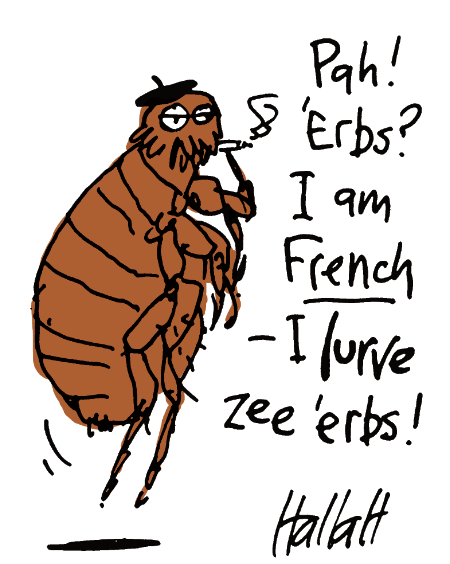
But knowing where the fleas came from wasn't going to help me get rid of them.
Advice from the Health Food Shop
I asked the chap in Wareham's health food shop if they had any treatments for a dog with fleas.
He looked at me sympathetically. "Our dog had had fleas."
Brilliant. He would know how to deal with them. "How did you treat them?" I said.
"My wife made up a special concoction of all sorts of essential oils."
I was already shampooing, spraying and combing Molly, so that was doable, but I asked, "Did that get rid of the fleas?"
"On the dog, yes. But they kept coming back, because they stay in the carpets and bedding."
"So what did you do?"
At this point he gritted his teeth. "We flea-bombed the house."
Damn.
The takeaway message: chemical-free essential oil treatments and herbs are all very well for preventing fleas, but if you get them in a modern house with carpets and soft furnishings, you have to nuke them.
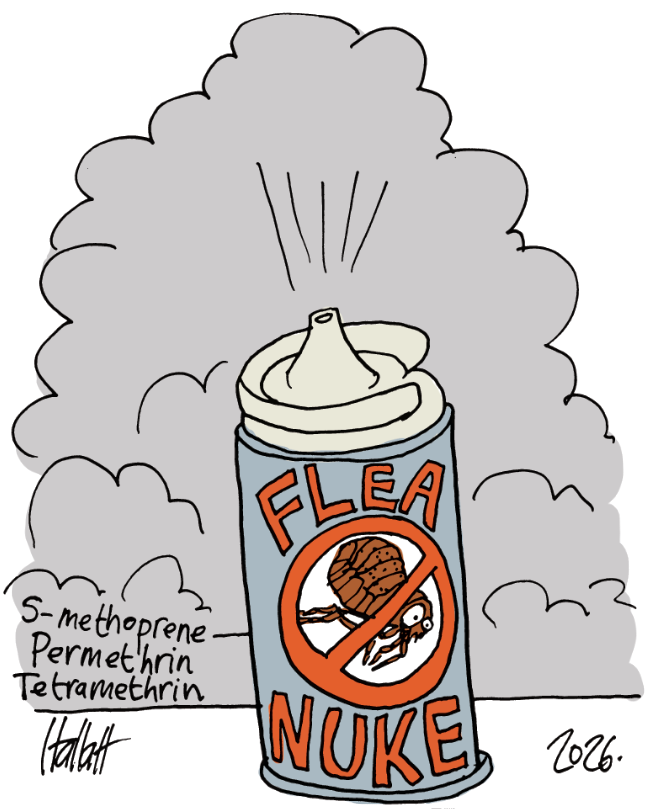
So I did. I set off flea bombs in each of the large rooms of the house, shut the door to the kitchen and bathroom, and we went to the…
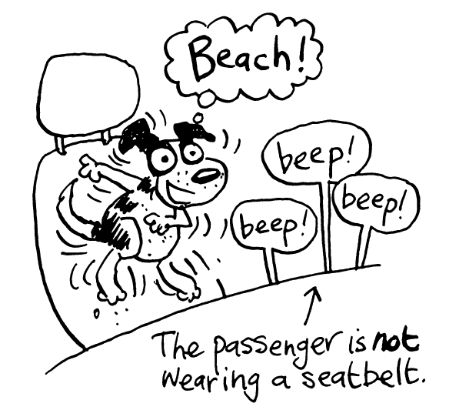
The New Anti-Flea Regime
The stuff in those flea bombs is toxic to aquatic life (which is probably why you can't buy the flea powders and sprays that we used in my childhood. It's also why we shouldn't be using the systemic chemical treatments that are also toxic to wildlife). It is a last resort for me.
A regime of neem shampooing, cedar oil and combing seems to have rid Molly of the fleas (fingers crossed). I have switched to using a cedar oil repellent (since I was amazed to see the stronger stuff actually knocked fleas out on contact), along with a collar impregnated with margosa (neem) and lavender extract. She is now the nicest-smelling dog in the neighbourhood.
Unless you are a flea, in which case, presumably, quite the opposite.
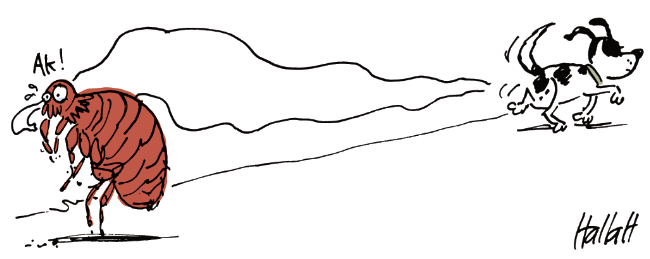
Spring is in full force, which means the ticks are out
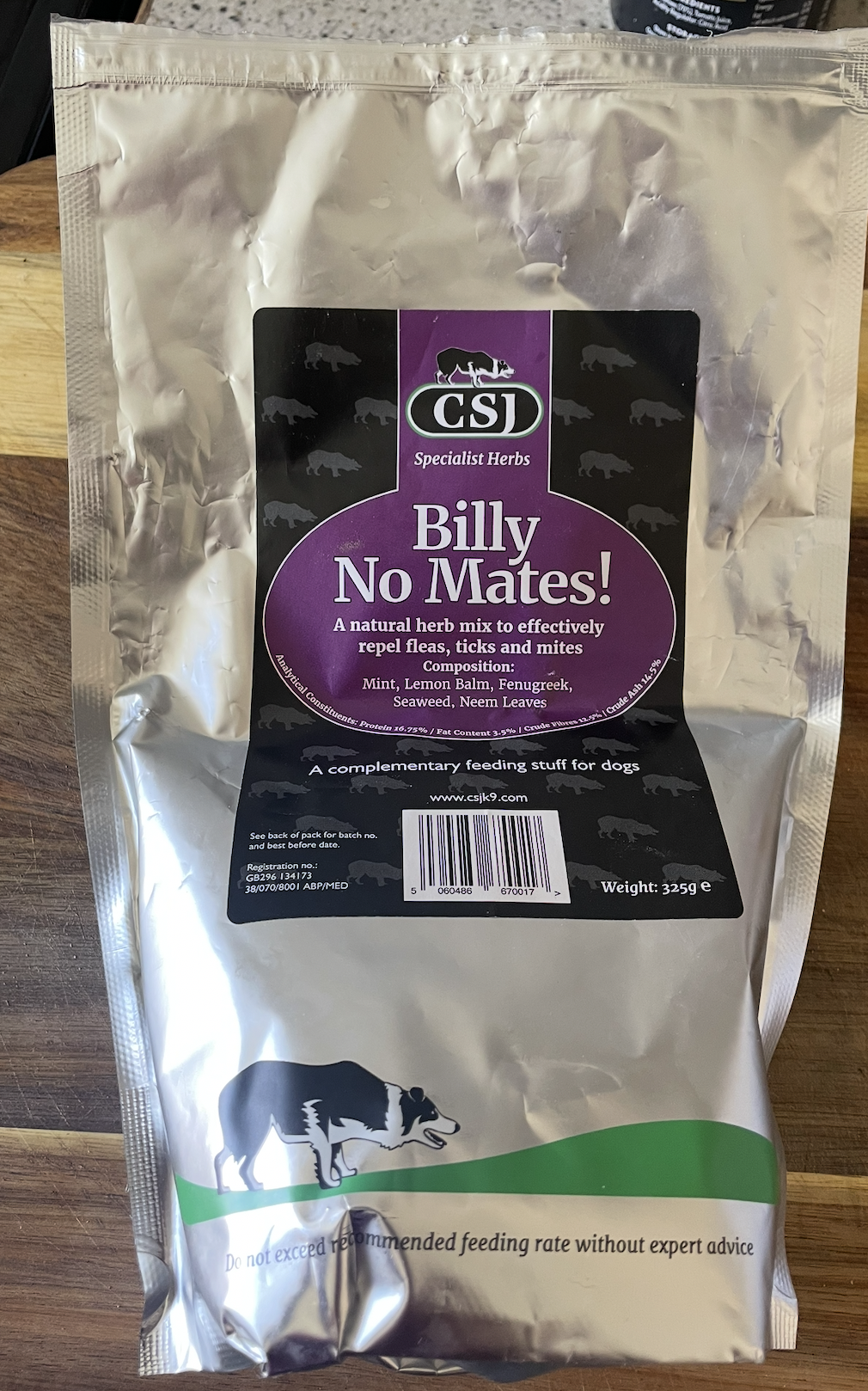
Molly got her first tick this week. I won't be giving her Bravecto, so I am relying on the Billy No Mates I've been adding to her food to build up as a natural flea and tick repellent — it just needs a little more time to kick in. In the meantime, I have started spraying her with neem oil before we head into the woods or anywhere with long grass.
The bigger news, though, is that we are celebrating two months seizure-free. 🎉
unboxing treats and billy no mates flea and tick prevention
Spring is here and I have noticed a lot more insect life (including ants in my bungalow!). It's time to protect Molly against the ticks that will soon be out and looking to hitch a ride. Since a flea treatment most probably caused her seizures, I am not going down the chemical route — at least not the pharmaceutical one. Billy No Mates gets good reviews and we shall give it a go. Since I was ordering that anyway, I used the donations people have made to buy Molly a treat and stock up.

40 days seizure free!
Molly had a couple of small seizures in early December, but nothing since then. The difficulty is keeping the weight on. We went to the vet for a routine vaccination a week or so ago and she was 6.8 kg. She was slightly overweight at 8.5 kg when we left New Zealand. The vet wasn’t worried, but I am increasing the amount of fat in the food I’m making and giving her bigger portions, which she loves. She always shows appreciation for her food:

Click through to a video of Molly the Jack Russell belching. A lot.
Christmas Countdown
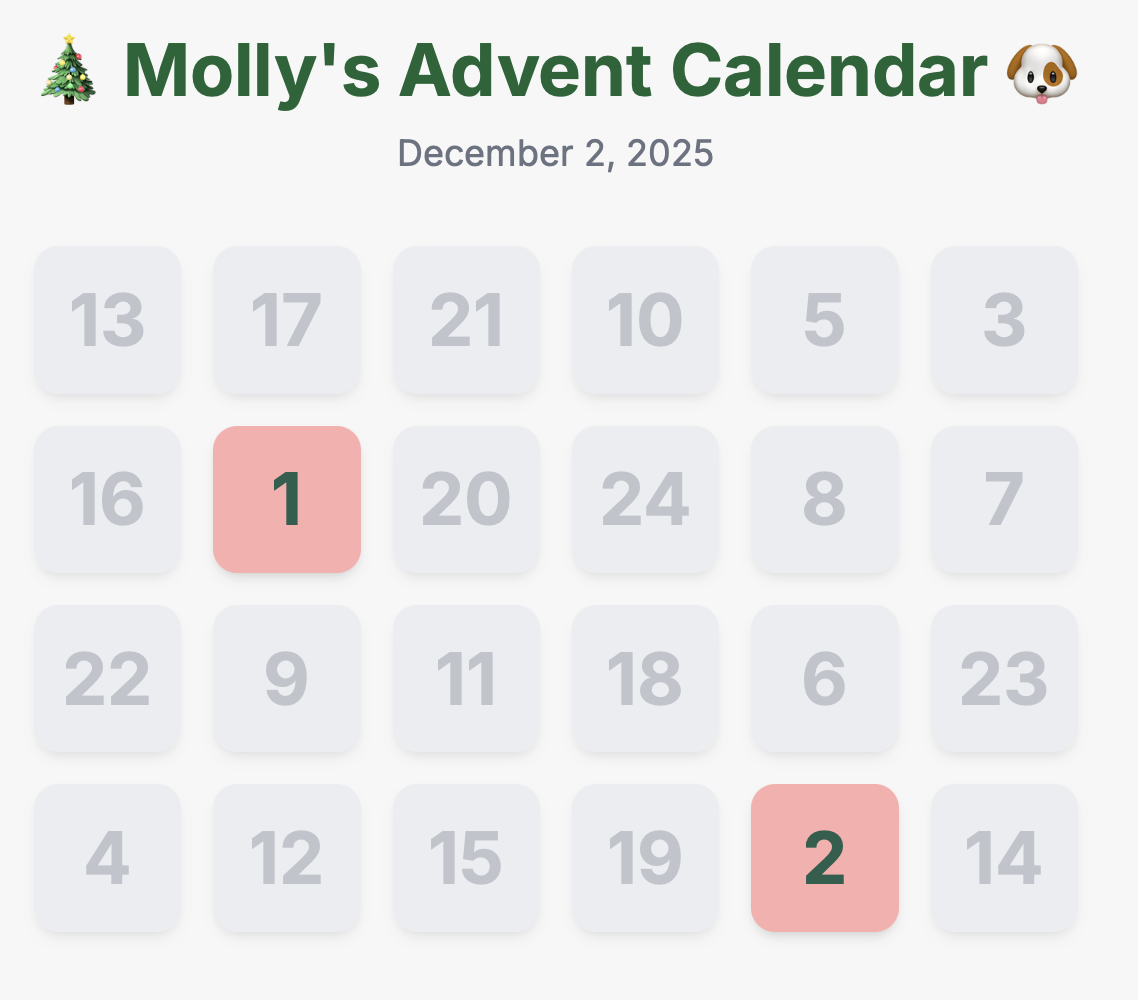
Molly is another month without seizures: a reason to celebrate.
Click here or the image below to go to her digital advent calendar:
a Little hiccup, but back on track
After 32 days seizure free, Molly had another one. But now she is over two weeks seizure free on her carbohydrate-free diet. Her fall from the keto wagon could've been due to food she is in the habit of snaffling from the verge – people drop a lot of litter around here including burger buns and chips. She doesn't know that it's no good for her.
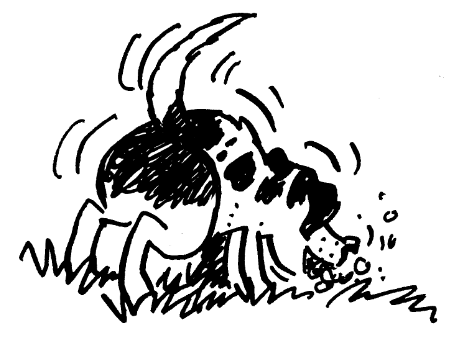
So she is now in fine fettle and we had a good weekend exploring near where we shall be living in Bere Regis. The first community rewilding project in the UK is happening just down the road. Molly helped me plant trees. Sort of. She dug the hole in completely the wrong place. But she had fun.
One Month seizure free
Molly turned five last week. This week marks one month of being free of seizures. The carbohydrate free diet is working and it is so good to have my happy, healthy dog back.
on a roll…
We are on a good roll of seizure-free days. Unfortunately that means making all Molly’s food. I’m sticking with that until she has been in the clear for a month. We are half way there. Today she was given a Friday treat of egg beaten with MCT oil with a sardine. I microwaved it and it turned into a little soufflé!
I missed videoing the part where she belched her appreciation.
It’s Hard to Keep a Dog in ketosis
After a misdiagnosis of a torn cruciate ligament, X-rays revealed that Molly actually had hip dysplasia. I took her to a veterinary physiotherapist who helped us address the lower back pain and what seemed like sciatica she was experiencing. But exercises and TENS therapy didn't help with the strange turns she was having.
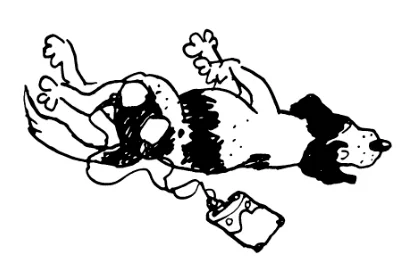
Molly hooked up to the TENS machine. A mild electric current stimulates the sciatic nerve and leads to pain relief
I began to keep a spreadsheet of when the seizures occurred.
The physiotherapist suggested it might not be physical, but neurological – focal seizures. Once she pointed that out, it all fell into place. The seizures were completely random, unrelated to how much exercise Molly had, time of day, or anything else we could identify.
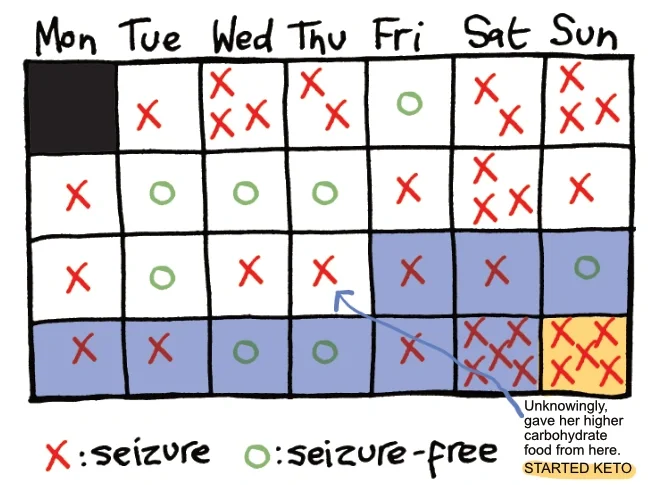
I started keeping note of Molly’s seizures on a Tuesday
A high fat, low protein, very low carbohydrate diet worked. At first.
I had a hunch that a ketogenic diet might help. (I have a friend who managed her migraines successfully when she cut carbohydrates from her diet. Migraines, like seizures are caused by abnormal electrical activity in the brain.) I looked for research about ketogenic diets in dogs and found that there was some success with using them to treat epilepsy. And a ketogenic diet did work – for a while. On day seven of her keto diet the seizures disappeared (the effect of higher carbohydrates also seemed to be delayed, giving her a cluster of severe seizures nine days after I made that mistake).
I made food from scratch using fatty cuts of lamb, brassicas like broccoli, sardines, and eggs, plus a little seaweed to cover trace minerals. I was also using a little MCT (medium chain triglyceride) oil, as I read it was a good way to promote ketosis.
The seizures, which had been happening almost daily (often causing disorientation, sometimes vomiting), stopped for 18 straight days.
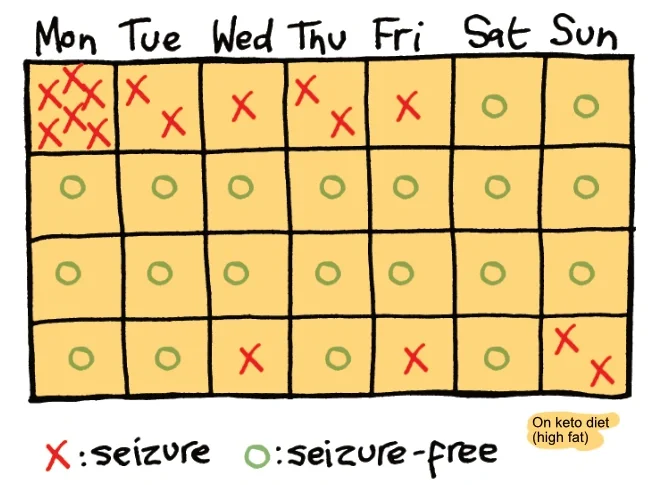
A high fat ketogenic diet worked at first
the seizures returned
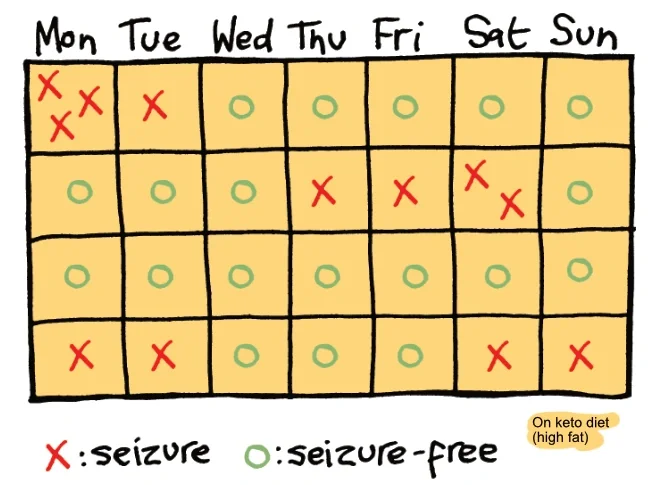
It is a struggle to keep Molly in ketosis and seizure-free
But maintaining ketosis via diet is difficult for a dog. I'm still researching exactly why this is the case, but the upshot is that it's nearly impossible to keep ketone levels high enough in the blood to have a protective effect on the brain.
This could be because protein in the diet breaks down to make glucose (via gluconeogenesis). If dogs are better at doing this, any protein will lead to higher blood glucose and fat won’t be converted into ketones.The fat will remain as fat.
Having high levels of fat in the diet – which can be healthy for people – is not healthy for dogs. It can lead to pancreatitis, a very dangerous condition.
Current Approach
I’ve reduced the amount of fat in her diet and increased the MCT oil. There is some interesting research on how MCT oil can increase ketones and have a separate neuroprotective effect. I'll write more about that later.
In the meantime, Molly’s seizures continue, but they are much milder than before. They don't seem to bother her as much as they bother me.
She's a happy dog.
Writing the Book I Couldn't Find: Seizures and Keto for Dogs
I'm a cartoonist. I love making my living as a cartoonist. But lately, my attention has been diverted by caring for my dog after she reacted badly to flea treatment.
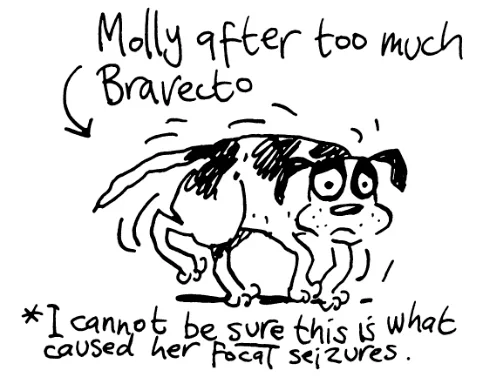
When my Jack Russell, Molly, started having seizures, I threw myself into research. With my biochemistry background, I was able to understand some of the research that's been done lately on ketogenic diets and how they can help with seizures. I could also grasp why a flea treatment might have caused the seizures in the first place. Through careful dietary management, we've largely managed to stop her seizures—something I'm now documenting in a book about our experiences.
I went onto Amazon this week to see what other books had been written about ketogenic diets for dogs with seizures, I discovered something troubling.
AI Slop is Preying on Pet Owners
I came across a couple of listings that looked promising. I even downloaded one of them.

It became immediately obvious that the content was written by AI. Recipes for frittatas and stir-fries and the like would never have been designed by a veterinarian for a dog with seizures.
I wondered if the vet listed as the author existed. When I searched for “Dr Rose Macpherson, DVM” her name only appeared on Amazon and some Facebook posts where a man was recommending her books (all of which had been published in August this year). Probably the same guy who used AI to write these books.

Nala Cross, another “author” of a book about dog seizures was also hard to find anywhere but on Amazon.

“Nala” has put out two books this year about dogs. Both have clearly AI-generated covers—no surprise there. She's supposedly a dog trainer, so surely she must appear somewhere on the internet to promote her business? Especially with a name that's not very common. But I couldn't find her anywhere. Probably because she doesn't exist. I didn’t download the book this time, but many of the reviews look very similar and one from a genuine buyer mentions that the content reads like it is AI-generated.
Here's what's happening: It's fairly easy to use tools to find out what content people are looking for on Amazon. If that content doesn't exist, what a brilliant opportunity to create it and make sure it does—regardless of whether you have any actual expertise.
These are independently published books, and I have no problem with that (I've put out over 10 myself). But I do have a problem with people pretending to be qualified professionals when they're clearly just using AI to prey on vulnerable people looking for answers for their pets’ illnesses.
When your dog is having seizures, you're desperate for help. You're willing to try anything that might work. The last thing you need is AI-generated rubbish masquerading as veterinary advice.
How to Help People Who Need Information on Ketogenic Diets for Dogs with Seizures
In researching what might help my Jack Russell, I found there was very little genuine information about ketogenic diets and how to specifically tailor them for dogs. The research exists, but it's scattered and often buried in academic papers that aren't accessible to the average pet owner.
Clearly, I'm not the only person who's been looking for this information. Which is exactly why Amazon is now getting flooded with AI slop—people are exploiting a genuine need in the market.
This is why I'm writing my own book. Not because I it’s the book I wanted to write (I wish Molly had never had flea treatment tablets and never developed seizures), but because the information simply isn't out there in an accessible form. And unlike the AI-generated alternatives, it will be based on real experience, real research, and real care for dogs and their owners who are going through this frightening experience.
If you have found this post because of your dog’s seizures, let me know; I’d love to share the book with you when I’m finished (and I’ll be looking for an advance reading team to read a free copy in exchange for honest reviews, not bot-generated ones)